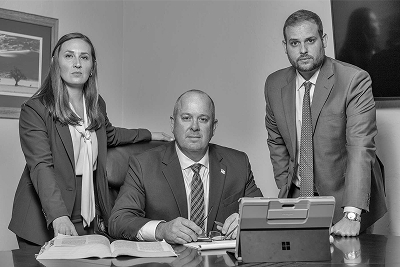
Being arrested or charged with a crime can feel like the ground has shifted under your feet. One moment, life is ordinary. The next, you are trying to figure out what to do, who to call, and what your future might look like. That kind of fear and uncertainty is something no one should have to face alone.
At the Law Firm of Scott T. Moorey, we understand this reality. We have been helping people navigate the criminal justice system in Southwest Florida since 1998, and our work in LaBelle and Hendry County reflects that same commitment. Whether your case is being handled at the Hendry County Courthouse on East Hickpochee Avenue or has connections to courts elsewhere in Florida’s 20th Judicial Circuit, our attorneys are familiar with the local landscape, the local procedures, and the people who make decisions that matter.
We believe something that guides everything we do: Good people do get arrested. That is not just a phrase. It is a recognition that most people facing criminal charges are ordinary individuals who found themselves in a difficult situation. We treat every client with that understanding.
LaBelle is a close-knit community. It is the county seat of Hendry County, a small city along the Caloosahatchee River where people tend to know each other. That closeness is one of the things that makes LaBelle special. It also means that a criminal charge can feel especially public and especially personal.
Criminal cases in LaBelle are typically handled through the Hendry County court system, which operates within Florida’s 20th Judicial Circuit. The same circuit covers Lee, Collier, Charlotte, and Glades counties. Cases may begin with an arrest by the Hendry County Sheriff’s Office or local law enforcement and proceed through arraignment, hearings, and potentially trial.
For someone who has never been through this process, it can be overwhelming. Most people do not know what to expect at a first appearance, what their bond conditions mean, or what options might be available to them before a case ever reaches a courtroom. That confusion is understandable. It is also exactly why having an attorney involved early can make a meaningful difference.
The consequences of a criminal charge in Florida can extend well beyond whatever sentence a court might impose.
Depending on the nature of the charges, you could be facing jail or prison time, fines and court costs, a permanent criminal record, driver’s license suspension, immigration consequences, loss of firearm rights, or damage to your reputation in a community where people know each other.
And if the charges involve something like a DUI, a sex offense, domestic violence, or a white-collar matter, the collateral effects can be even more significant. Sex offenses may carry registration requirements. A domestic violence conviction can affect family relationships and firearm rights. A white-collar charge can threaten a career or professional license.
None of this is meant to frighten you. It is meant to help you understand why these situations deserve serious, experienced attention.
The Law Firm of Scott T. Moorey focuses exclusively on criminal defense. That focus matters. When a law firm handles only criminal cases, its attorneys develop a depth of knowledge and courtroom familiarity that generalists simply cannot match.
Florida DUI charges carry significant penalties even for first-time offenses. A case may involve breath or blood test results, field sobriety exercises, and questions about whether law enforcement followed proper procedures.
Domestic violence charges move quickly in Florida. An arrest may lead to a no-contact order within hours, which can affect where you live and whether you can communicate with family members.
Sex crime allegations carry some of the most serious consequences in the Florida criminal justice system. These cases require careful, thorough, and sensitive handling at every stage.
White-collar charges involving fraud, theft, embezzlement, or related allegations can involve financial records, digital evidence, and complex questions about intent.
Drug cases in Hendry County may involve possession, prescription medications, trafficking allegations, or drug court considerations. The substance, amount, and search procedures can all matter.
Theft crimes can range from petit theft misdemeanors to grand theft felonies. Even a relatively minor theft allegation can affect employment, housing, and background checks.
Assault and battery charges can arise from arguments, misunderstandings, self-defense situations, or fast-moving confrontations. Context matters enormously in how these cases are handled.
A probation violation can put your freedom at risk, even when the alleged violation involves a missed appointment, failed test, or technical issue.
Timing matters in criminal cases. The steps you take in the hours and days immediately following an arrest can shape how your case unfolds.
Florida law generally requires that a person who has been arrested appear before a judge quickly. This hearing, sometimes called a first appearance, is where bond conditions may be addressed. Having an attorney involved at an early stage can make a real difference in what happens next, including whether you are released and under what conditions.
Evidence can also change. Witnesses’ memories fade. Surveillance footage gets overwritten. Physical evidence can be lost or compromised. The sooner an attorney gets involved, the better positioned they are to identify and preserve what matters.
There is also the matter of what not to do. Many people, in an effort to explain themselves or clear up a misunderstanding, speak to law enforcement without a lawyer present. That impulse is understandable. It is also one of the most common mistakes we see. You have a constitutional right to remain silent and a right to have an attorney present. Using those rights is not an admission of guilt.
Criminal cases in Florida generally move through several stages, though the timeline and specific steps depend on the charges and the court involved.
After an arrest and first appearance, the case typically moves toward arraignment, where formal charges are entered and a plea is entered. From there, the attorneys on both sides engage in discovery, where evidence is exchanged. Pretrial motions may be filed to challenge how evidence was gathered or to raise other legal issues. Many cases resolve before trial through negotiation. Others proceed to a jury or bench trial.
Throughout all of this, communication is essential. We make it a point to explain what is happening, why it matters, and what options are available at each stage. You should never feel like you are in the dark about your own case.
LaBelle is not Fort Myers. It is not Naples or Punta Gorda. It is a smaller community with its own legal culture, court personnel, and way of doing things. Knowing the local environment matters.
The Law Firm of Scott T. Moorey has been serving clients throughout Southwest Florida, including in Hendry County, since 1998. That history means we are not strangers to the Hendry County Courthouse on Hickpochee Avenue. We are familiar with how cases move through the local system, and we have the broader regional context that comes from also practicing in Lee, Collier, and Charlotte counties.
For someone facing charges in LaBelle, that combination of local familiarity and regional depth can be genuinely valuable. Criminal defense is not a one-size-fits-all practice. The specific court, prosecutor’s office, and circumstances of the case all matter.
A criminal case is not only about what happens in court. The long-term consequences can affect many parts of your life, especially in a smaller community like LaBelle where reputation, work relationships, and family connections often overlap.
Employers frequently conduct background checks. A criminal charge or conviction may affect current employment, future applications, promotions, or eligibility for jobs that require trust, driving, licensing, or security clearance.
Licensed professionals may face reporting obligations or disciplinary review after certain criminal charges. This can affect health care workers, teachers, contractors, financial professionals, commercial drivers, and others whose careers depend on a clean record or professional trust.
Students and young adults may face concerns involving scholarships, internships, school discipline, campus housing, graduate school applications, or professional programs.
Landlords may review criminal history when evaluating rental applications. A conviction can make housing more difficult, particularly when rental options are limited.
For noncitizens, criminal charges can carry consequences beyond the Florida court system. Certain convictions may affect immigration status, visa eligibility, green card applications, naturalization, or removal proceedings.
Many of the people we represent have never been arrested before. They are workers, business owners, parents, students, retirees, and community members who found themselves in a situation they never anticipated.
If this is your first encounter with the legal system, that is something we take into account. First-time offenders in Florida may have access to options that are not available to repeat offenders, including diversion programs, deferred prosecution, and other alternatives that may allow a case to resolve without a conviction on your record.
Whether those options are available depends on the specific charge, the circumstances, and the prosecutor’s office involved. We can assess what might be realistic in your situation and give you an honest picture of what to expect.
What we will not do is make promises we cannot keep. Every case is different. Outcomes depend on the facts, the evidence, the law, and decisions that are ultimately made by judges and juries. What we can tell you is that having experienced legal representation gives you the best opportunity to understand your options and move through this process as effectively as possible.
We do not think it serves anyone to make grand promises about outcomes. Every case is different. We give clients honest guidance, clear explanations, and practical information so they can make informed decisions.
We ask questions, review evidence, look for weaknesses in the prosecution’s case, and work to understand the full picture of what happened. When evidence needs to be challenged, we challenge it. When constitutional rights have been violated, we raise it. When a case needs to go to trial, we prepare for trial.
Good people do get arrested. A criminal charge does not define who you are, and it does not determine how your story ends. Our role is to help you protect your rights, understand your options, and move forward with the strongest possible footing.
Criminal cases in LaBelle are generally handled through the Hendry County court system, which is part of Florida’s 20th Judicial Circuit. Many proceedings take place at the Hendry County Courthouse on East Hickpochee Avenue.
You should speak with a criminal defense attorney before answering questions from law enforcement. Even truthful statements can be misunderstood, taken out of context, or used against you later.
Not necessarily. An arrest is not the same as a conviction. The outcome depends on the charge, your criminal history, the evidence, and the options available in your case.
A first arrest does not automatically mean you will be convicted or go to jail. Depending on the facts, diversion programs, reduced charges, probationary resolutions, or other alternatives may be available.
It can. Employers may review criminal history when making hiring, promotion, or disciplinary decisions. This can be especially concerning in close-knit communities where professional reputation matters.
Potentially. Criminal charges can affect scholarships, internships, school discipline, campus housing, graduate school applications, and certain educational programs.
False accusations and misunderstandings do happen. If you believe the allegation is inaccurate, avoid confronting the accuser directly and speak with an attorney about preserving evidence, identifying witnesses, and protecting your rights.
Every case is different. Some misdemeanor cases may resolve within a few months, while more complex felony cases can take longer. The timeline depends on the evidence, court scheduling, negotiations, motions, and whether the case proceeds to trial.
As soon as possible. Early legal guidance can help preserve evidence, identify witnesses, address bond issues, and avoid statements or decisions that may harm your defense.
Yes. The Law Firm of Scott T. Moorey represents clients facing misdemeanor and felony charges in LaBelle, Hendry County, and throughout Southwest Florida.
Criminal charges do not happen on a schedule. Arrests happen at night, on weekends, and during holidays. If you or someone you care about is facing criminal charges in LaBelle, Clewiston, or anywhere in Hendry County, we encourage you to reach out.
You do not have to figure this out alone. The Law Firm of Scott T. Moorey has been serving Southwest Florida since 1998, and we are here to help you understand your options and take the next step with confidence.
Contact our LaBelle criminal defense attorneys online to schedule a confidential consultation.