
Picture this: you had one drink at dinner, you feel completely fine and you are heading home after a long day. A police officer pulls you over, detects the faint smell of alcohol and within minutes you are sitting in the back of a patrol car facing a DUI arrest. It can happen that fast, and it happens to good people every day.
If this is your first DUI charge, it is completely normal to feel overwhelmed, frightened and unsure of what comes next. What matters most right now is taking the situation seriously and getting the right legal help. A first-time DUI conviction in Florida can carry lasting consequences that affect your job, finances, freedom and ability to drive.
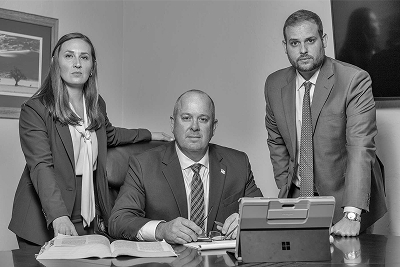
At the Law Firm of Scott T. Moorey, our Fort Myers DUI lawyers and attorneys help first-time DUI clients throughout Lee, Collier, Charlotte, Hendry and Glades counties. Since 1998, our law firm has focused exclusively on criminal defense, helping people understand their options and protect their futures during difficult times.
Good people do get arrested. That belief has guided our law firm for decades. Many of the people we represent are hardworking professionals, parents, business owners, students and members of the community who never expected to find themselves facing criminal charges. A DUI arrest does not automatically define who you are or what your future will look like. Understanding your rights and your options is the first step toward moving forward.
Violent crime is not a single criminal offense. Instead, it refers to a broad category of charges involving allegations of force, threats, bodily harm or conduct that places another person in fear of harm. Some violent crime charges are misdemeanors, while others are serious felonies that can carry the possibility of lengthy prison sentences.
Many first-time offenders assume that because they have no prior criminal record, the consequences will be minor. Unfortunately, that is not always the case. Under Florida law, even a first DUI conviction can result in penalties that affect nearly every aspect of your life.
A first-time DUI conviction carries fines ranging from $500 to $1,000. However, if your blood alcohol level was .15% or higher, those fines increase to between $1,000 and $2,000. These figures do not include court costs, administrative fees or the cost of required programs.
You could face up to six months in jail for a standard first-time DUI. If your blood alcohol level was .15% or higher, or if a minor was in the vehicle, the maximum sentence increases to nine months. Even a relatively short jail sentence can disrupt your employment, finances and family life.
A first-time conviction can result in a driver’s license revocation for at least 180 days. Depending on the circumstances of your case, the revocation period may be longer. Losing your license can make it difficult to get to work, attend school, care for family members and manage everyday responsibilities.
Your vehicle may be impounded for a mandatory minimum of 10 days following a first-time DUI conviction. This can create both logistical and financial challenges, particularly for people who rely on their vehicles for work.
Florida courts require convicted first-time DUI offenders to complete a state-approved DUI education program. Depending on the facts of the case, you may also be required to undergo a substance abuse evaluation and complete any recommended treatment.
If your blood alcohol level was .15% or higher, or if a minor was in the vehicle, the court may require you to install an ignition interlock device. This device requires a breath sample before your vehicle will start and is typically installed at your expense.
Many people are surprised to learn that the financial impact of a DUI often extends well beyond court-imposed penalties. Insurance premiums frequently increase substantially following a conviction, and some insurers may refuse to continue coverage altogether.
Taken together, these penalties demonstrate why pleading guilty before fully understanding your options can be a costly mistake. Before making any decisions, speak with an experienced attorney who understands Florida DUI law and the local courts in Southwest Florida.
Many people are surprised to learn that a Florida DUI case does not involve just one legal proceeding. After an arrest, you may find yourself dealing with two separate processes at the same time. One involves your driver’s license, while the other involves the criminal charge itself. Understanding how these processes work can help you avoid mistakes and make informed decisions about your next steps.
Immediately after a DUI arrest, the Florida Department of Highway Safety and Motor Vehicles may begin administrative proceedings against your driving privileges. This process is completely separate from the criminal case and focuses only on whether your driver’s license should be suspended.
Many first-time DUI defendants are surprised to learn that they can face license consequences even before their criminal case is resolved. Understanding this process is important because some of the deadlines occur very quickly after an arrest.
The 10-Day Deadline
In many DUI cases, you have only 10 days from the date of your arrest to request a formal review hearing. This deadline is extremely important because it gives you the opportunity to challenge the administrative suspension of your license.
If no hearing is requested within the required timeframe, the suspension may take effect automatically. This can happen regardless of whether the criminal charge is later reduced, dismissed or resolved in your favor.
The Formal Review Hearing
A formal review hearing is an administrative proceeding conducted by the Florida Department of Highway Safety and Motor Vehicles rather than a criminal court. During the hearing, evidence may be reviewed to determine whether the suspension should remain in place.
The hearing may address issues such as whether law enforcement had legal grounds for the stop, whether the arrest was supported by sufficient evidence and whether testing procedures were properly followed. While the hearing does not determine whether you are guilty of DUI, it can have a significant impact on your ability to continue driving.
Hardship License Eligibility
For many people, losing driving privileges creates immediate problems involving work, school, child care and medical appointments. Depending on the circumstances, some drivers may be eligible for a hardship license that allows limited driving privileges for approved purposes.
Eligibility requirements vary based on factors such as prior driving history, the reason for the suspension and compliance with other state requirements. A hardship license does not restore full driving privileges, but it may provide an important way to maintain employment and meet daily obligations while a case is pending.
Administrative Outcomes
At the conclusion of the administrative process, the suspension may be sustained, modified or set aside depending on the facts and circumstances involved. The outcome of the administrative case does not automatically determine the outcome of the criminal case, just as the outcome of the criminal case does not necessarily resolve every administrative licensing issue.
Because these proceedings operate independently of one another, it is important to understand that protecting your driver’s license often requires addressing both the administrative and criminal aspects of the case at the same time.
At the same time, the criminal case moves through Florida’s court system. This process determines whether you will ultimately be convicted of DUI and what penalties may apply if a conviction occurs. Many DUI cases in Southwest Florida are handled in courts serving Lee County, Collier County, Charlotte County, Hendry County and Glades County, each of which may have its own procedures and scheduling practices.
Although every case is different, most DUI cases follow a similar path.
Arrest and First Appearance
After an arrest, a judge reviews the circumstances of the case and determines conditions of release. Depending on the situation, this may occur shortly after the arrest if the person remains in custody.
Arraignment
An arraignment is the court hearing where you are formally advised of the charges and enter a plea. In many DUI cases, your attorney can handle much of this process on your behalf.
Discovery and Investigation
During discovery, both sides exchange information and evidence. This may include police reports, body camera footage, dash camera videos, breath test results, maintenance records for testing equipment, witness statements and other materials relevant to the case.
This stage is often one of the most important parts of the process because it allows your attorney to identify weaknesses in the prosecution’s case and evaluate potential defenses. Reviewing what happened during the traffic stop can be especially important in a first-time DUI case.
Pretrial Motions and Negotiations
Before trial, attorneys may file motions asking the court to address legal issues in the case. For example, a motion may challenge the legality of a traffic stop or seek to exclude improperly obtained evidence.
During this phase, prosecutors and defense attorneys may also discuss possible resolutions. In some cases, the evidence may support a reduction of charges or another negotiated outcome.
Trial
If the case cannot be resolved beforehand, it may proceed to trial. At trial, prosecutors must prove the DUI charge beyond a reasonable doubt. The defense has the opportunity to challenge the evidence, question witnesses and present arguments on your behalf.
Sentencing
If a conviction occurs, the court will impose a sentence based on Florida law and the facts of the case. Penalties may include fines, probation, driver’s license consequences, DUI school requirements, ignition interlock requirements and potentially jail time.
Many first-time DUI defendants have never been involved with the criminal justice system before. Knowing what to expect can make the process less intimidating and help you make informed decisions at every stage. While every case follows its own path, understanding both the administrative and criminal sides of a DUI case is an important first step toward protecting your rights and your future.
Many people understandably focus on the immediate consequences of a DUI arrest. However, some of the most significant effects may appear months or even years later.
A DUI conviction can affect:
For professionals such as nurses, teachers, contractors, health care workers and other licensed individuals, a conviction may need to be reported to a licensing board. Every situation is different, which is why it is important to discuss the potential long-term consequences with a knowledgeable attorney before deciding how to proceed.
Many first-time DUI defendants want to know whether their charge can be reduced or dismissed. The answer depends entirely on the facts of the case.
Some common defense issues include:
In some cases, prosecutors may agree to reduce a DUI charge to a lesser offense. In others, legal challenges may lead to the exclusion of evidence or dismissal of charges. While no attorney can guarantee a particular outcome, a thorough review of the evidence often reveals opportunities that would otherwise go unnoticed.
Our attorneys bring more than two decades of experience to DUI defense throughout Southwest Florida. We understand that most first-time DUI clients have never dealt with the criminal justice system before and often have many questions about what happens next.
When you come to our law firm, we begin by listening. We want to understand your concerns, explain the process in plain language and help you make informed decisions about your case.
Our lawyers review every piece of available evidence, examine potential defenses and develop a strategy tailored to your circumstances. Throughout the process, we focus on protecting your rights, minimizing potential consequences and helping you move forward with confidence.
We serve clients from our offices in Fort Myers, Naples, Punta Gorda and LaBelle, representing individuals throughout Lee, Collier, Charlotte, Hendry and Glades counties.
No. A charge is not the same as a conviction. You may also have the opportunity to challenge an administrative suspension through a formal review hearing. Depending on the circumstances, you may be eligible for a hardship license that allows limited driving privileges.
Yes, in some situations. Potential outcomes depend on the evidence, the circumstances of the arrest and the legal issues involved in the case. An experienced attorney can identify possible opportunities to challenge the state’s evidence or seek a favorable resolution.
Given the potential penalties and long-term consequences of a conviction, many people find it beneficial to work with a lawyer who understands Florida DUI law. An attorney can help protect your rights, evaluate evidence and guide you through both the criminal and administrative aspects of the case.
Refusing a breath test may trigger a separate driver’s license suspension under Florida’s implied consent law. Implied consent means that drivers are generally treated as having agreed to certain chemical testing when they drive on Florida roads and legal requirements are met.
However, a refusal does not automatically result in a criminal conviction. The prosecution may still attempt to prove impairment through other forms of evidence, including the officer’s observations, video footage and field sobriety exercises. While a refusal may limit some evidence available to prosecutors, it can also create separate administrative consequences that affect your driving privileges.
Florida law does not generally permit the expungement or sealing of a DUI conviction. As a result, a conviction can remain visible on background checks for many years. This is one reason why it is important to explore your legal options before accepting a plea.
Penalties generally become more serious when a person has prior DUI convictions. A later arrest may raise questions about enhanced penalties, longer license consequences, ignition interlock requirements and other issues. If you are facing another DUI charge, it is important to understand how prior convictions may affect your case.
In many cases, people first learn they may be facing allegations when law enforcement contacts them for an interview or begins asking questions. What you do during these early stages can have a significant impact on your case. Before speaking with investigators or making decisions about your defense, it is important to understand your rights and your options. Our firm also helps people facing second and third DUI offenses.
As soon as possible. The 10-day deadline for challenging a license suspension can arrive quickly, and early involvement by an attorney often provides more opportunities to protect your interests.
A guilty plea is not simply the end of a criminal case. It can affect your employment opportunities, professional licenses, insurance rates and future prospects for years to come.
Before making any decisions, take the time to understand your rights and the options available to you. The attorneys at the Law Firm of Scott T. Moorey are ready to review your situation, answer your questions and provide honest guidance about the road ahead.
Many of our clients never expected to find themselves facing criminal charges. Like our firm’s guiding belief recognizes, good people do get arrested, and one allegation does not have to define your future.
Contact our Southwest Florida DUI defense attorneys online to schedule your free consultation. We serve clients throughout Lee, Collier, Charlotte, Hendry and Glades counties from our offices in Fort Myers, Naples, Punta Gorda and LaBelle.