A drug charge can affect your freedom, your record, your job, your education and your future. Whether you are facing a first-time possession charge, a prescription drug allegation, a trafficking accusation or a more complex drug-related case, it is important to take the situation seriously from the beginning.
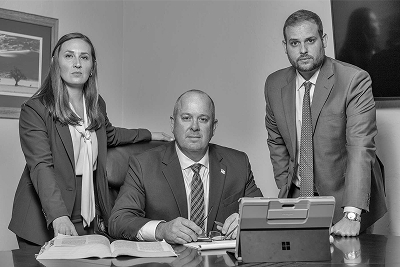
At the Law Firm of Scott T. Moorey, our Fort Myers criminal defense lawyers and attorneys represent clients throughout Southwest Florida who are facing drug charges of all kinds. Since 1998, our law firm has focused exclusively on criminal defense, helping people understand their rights, evaluate the evidence and make informed decisions about their future.
Good people do get arrested. Many drug cases involve addiction struggles, prescription misunderstandings, unlawful searches, shared vehicles, roommate situations, mistaken assumptions or people who simply made a mistake. An arrest does not define who you are, and it does not automatically determine the outcome of your case.
Florida drug charges can carry consequences that are far more serious than many people expect. The potential penalties depend on the type of substance involved, the amount, the location of the arrest, whether prosecutors allege intent to sell or distribute and whether the person has prior criminal history.
A case that begins as possession may become more serious if law enforcement claims the amount, packaging, cash, messages or other evidence suggests sale or trafficking. In other cases, a person may face serious charges based on drugs found in a shared home, shared vehicle or location where multiple people had access.
Because drug cases often depend on search procedures, possession issues, lab testing and officer interpretations, they should be reviewed carefully before any decisions are made.
The Law Firm of Scott T. Moorey represents clients facing a wide range of drug-related allegations throughout Southwest Florida.
We also represent young people accused of drug offenses through our juvenile defense practice. Early legal guidance can be especially important when a drug allegation may affect a young person’s school, record, scholarships, college plans or future opportunities.
The penalties for Florida drug offenses vary significantly depending on the type of substance involved, the amount, your criminal history, and whether prosecutors allege possession, sale, trafficking, or manufacturing. While some offenses may be charged as misdemeanors, many drug crimes are prosecuted as felonies carrying the possibility of prison time, substantial fines, and long-term consequences that extend well beyond the courtroom.
Type of Drug Charge | Potential Penalties and Consequences |
Misdemeanor Possession | Depending on the substance, penalties may include up to 1 year in jail, up to $1,000 in fines, probation, community service, drug treatment requirements, and a permanent criminal record. |
Felony Possession | Many felony possession offenses carry up to 5 years in prison and fines of up to $5,000, along with probation, loss of certain civil rights, and long-term impacts on employment and professional licensing. |
Possession With Intent to Sell | Often charged as a felony offense carrying potential prison sentences ranging from several years to decades depending on the substance involved, along with substantial fines and a permanent criminal record. |
Drug Trafficking | Florida trafficking laws impose mandatory minimum prison sentences that may begin at 3 years and increase significantly based on the substance and quantity involved. Fines can range from tens of thousands to hundreds of thousands of dollars. |
Drug Manufacturing or Cultivation | Manufacturing-related offenses are often charged as felonies carrying potential prison sentences of several years or more, substantial fines, and possible property forfeiture depending on the circumstances. |
Juvenile Drug Charges | Potential consequences may include diversion programs, probation, counseling requirements, juvenile detention in some cases, school disciplinary action, and impacts on future educational opportunities. |
Drug trafficking allegations deserve particular attention because Florida law often bases trafficking charges on the weight of the substance involved rather than proof that a person was actually selling drugs. As a result, someone can face mandatory minimum prison sentences even when there is no allegation of a drug transaction.
Because the penalties can vary dramatically depending on the facts of the case, it is important to have an experienced criminal defense attorney review the charges, the evidence, the search procedures used by law enforcement, and any available alternatives such as diversion programs or drug court. Early intervention can often make a significant difference in the options available moving forward.
A drug conviction can create consequences that extend far beyond the immediate court penalties. For many people, the long-term practical effects are just as concerning as the criminal sentence.
Employers often conduct background checks. A drug conviction may affect current employment, future job applications or positions that require driving, security clearance or professional trust.
Drug charges can create serious concerns for nurses, teachers, contractors, medical professionals, financial professionals and other licensed workers. Some licensing boards require disclosure of arrests or convictions.
Students may face consequences involving school discipline, scholarships, internships, campus housing, athletics, graduate school applications and professional programs. A drug-related case can affect both education and long-term career planning.
For noncitizens, drug convictions can carry serious immigration consequences. Anyone who is not a United States citizen should speak with an attorney before making decisions about a drug charge.
Landlords may review criminal history when evaluating rental applications. A drug conviction can create obstacles in competitive housing markets.
Drug cases arise in many different ways. Some involve serious trafficking allegations, but many involve people who never expected to face criminal charges.
A person may be accused after drugs are found in a shared vehicle, shared apartment, backpack, purse or room used by more than one person. Someone may be charged because of prescription medication they believed they were allowed to possess. A young person may be arrested after being with friends who had drugs or paraphernalia nearby.
In other cases, substance abuse or addiction may be part of the situation. When treatment is more appropriate than incarceration, that context should be presented clearly. A drug charge does not automatically mean a person is dangerous or beyond help. It means the facts, evidence and circumstances need careful review.
Every drug case is different. The strongest defense depends on how the evidence was obtained, where the drugs were found, who had access to them, and whether prosecutors can actually prove every element of the charge beyond a reasonable doubt. At the Law Firm of Scott T. Moorey, we conduct a thorough review of the facts and build a defense strategy tailored to the specific circumstances of your case.
Many drug arrests begin with a traffic stop, vehicle search, home search, or personal search. Law enforcement officers must follow constitutional requirements when gathering evidence. If officers conducted an unlawful search, exceeded the scope of a warrant, or lacked proper legal justification for the search, some or all of the evidence may be suppressed. In certain cases, suppressing critical evidence can lead to reduced charges or dismissal.
Drug cases often involve substances found in locations shared by multiple people, such as vehicles, homes, apartments, hotel rooms, or workplaces. Prosecutors must prove more than mere proximity to the drugs. They generally must establish that you knew the drugs were present and exercised control over them. When multiple people had access to the location, proving constructive possession can be far more difficult than prosecutors initially suggest.
Not every person accused of a drug crime knows that drugs were present. Someone may borrow a vehicle, carry another person’s bag, stay in a shared residence, or unknowingly possess medication that belongs to someone else. If the state cannot prove that you knew about the substance, that weakness may significantly undermine its case.
Before obtaining a conviction, prosecutors must establish that the substance in question is actually an illegal controlled substance. That often requires laboratory analysis, proper evidence handling, and an unbroken chain of custody. Errors in testing, labeling, storage, transportation, or documentation can raise important questions about the reliability of the evidence.
Some drug investigations involve confidential informants, undercover officers, or controlled purchases. While law enforcement may investigate suspected criminal activity, officers cannot improperly induce someone to commit a crime they otherwise would not have committed. When police conduct crosses the line, an entrapment defense may be available.
The burden of proof remains on the prosecution. Prosecutors must establish every element of the offense beyond a reasonable doubt. If witness testimony is inconsistent, physical evidence is lacking, laboratory results are questionable, or key facts remain unproven, the state may be unable to meet that burden.
Not every successful outcome requires a trial. For some first-time offenders and eligible defendants, diversion programs, drug court, or pretrial intervention may provide an opportunity to avoid a conviction while addressing underlying issues such as substance abuse. These programs often focus on treatment, accountability, and rehabilitation rather than incarceration. When appropriate, we help clients evaluate whether these alternatives may offer the best path forward.
Our goal is not simply to react to the charges. It is to identify weaknesses in the prosecution’s case, protect your constitutional rights, and pursue the strategy that best positions you for a favorable outcome.
Some drug cases may be eligible for diversion, drug court, pretrial intervention or treatment-focused resolutions. These options may be especially important for first-time offenders, people struggling with addiction and young people facing drug allegations.
Drug court and diversion programs may require counseling, treatment, testing, community service, education programs and compliance with court requirements. When successfully completed, these programs may help reduce the long-term impact of the case.
Alternative options are not available in every case. Eligibility depends on the charge, prior record, facts, prosecutor’s position and local court practices. An attorney can help evaluate whether one of these paths may be available.
The Law Firm of Scott T. Moorey represents clients facing drug charges throughout Southwest Florida, including Fort Myers, Cape Coral, Naples, Punta Gorda and LaBelle.
We serve clients throughout Lee County, Collier County, Charlotte County, Hendry County and Glades County. Our attorneys understand the local courts, prosecutors and procedures that may affect drug cases throughout the region.
Good people do get arrested. Whether you are facing a first-time possession charge, a trafficking allegation or accusations related to addiction or prescription medication, the charge does not define your future. Our role is to help you understand your rights, evaluate the evidence and make informed decisions about what comes next.
Exercise your right to remain silent and contact a criminal defense attorney as soon as possible. Do not make statements to law enforcement or try to explain the situation without legal guidance. Early representation may help protect your rights and preserve important defense options.
Yes, in some cases. A drug possession charge may be dismissed if evidence was obtained unlawfully, prosecutors cannot prove possession, lab testing is unreliable or the case is resolved through a diversion or treatment-based program.
Possession generally involves allegations that a person had a controlled substance. Trafficking is often based on the type and weight of the substance involved. In Florida, a person can face trafficking charges even without an allegation that they sold drugs.
Yes, but prosecutors must prove more than the fact that drugs were nearby. In constructive possession cases, knowledge and control are often key issues. Shared spaces can create important defense questions.
Drug court is a treatment-focused program that may be available in certain cases. Participants may be required to complete treatment, testing, counseling and other requirements. Successful completion may reduce the long-term consequences of the case.
In some situations, yes. First-time offenders may be eligible for diversion, pretrial intervention, drug court or negotiated resolutions that avoid a conviction. Eligibility depends on the specific facts and charge.
Potentially. Drug charges may affect school discipline, scholarships, internships, campus housing, athletics and future educational opportunities. Students should take these cases seriously even when the charge seems minor.
Yes. Drug charges can affect professional licenses in fields such as health care, education, finance, law enforcement and other regulated professions. Licensed professionals should discuss these risks with an attorney before resolving a case.
In some cases, record sealing or expungement may be available if eligibility requirements are met. The outcome of the case, prior history and the specific charge all matter.
Yes. We represent clients throughout Fort Myers, Cape Coral, Naples, Punta Gorda, LaBelle and communities across Lee, Collier, Charlotte, Hendry and Glades counties.
You do not have to face a drug charge alone. The sooner you have legal guidance, the sooner you can begin understanding your rights, evaluating your options and protecting your future.
Contact our Southwest Florida drug crime defense attorneys online to schedule a confidential consultation and learn more about your options.